


12 Rules of Ihram for Women for Hajj & Umrah
ٱلْحَجُّ أَشْهُرٌۭ مَّعْلُومَـٰتٌۭ ۚ فَمَن فَرَضَ فِيهِنَّ ٱلْحَجَّ فَلَا رَفَثَ وَلَا فُسُوقَ وَلَا جِدَالَ فِى ٱلْحَجِّ ۗ وَمَا تَفْعَلُوا۟ مِنْ خَيْرٍۢ يَعْلَمْهُ ٱللَّهُ ۗ وَتَزَوَّدُوا۟ فَإِنَّ خَيْرَ ٱلزَّادِ ٱلتَّقْوَىٰ ۚ وَٱتَّقُونِ يَـٰٓأُو۟لِى ٱلْأَلْبَـٰبِ ١٩٧
˹Commitment to˺ pilgrimage is made in appointed months. Whoever commits to ˹performing˺ pilgrimage, let them stay away from intimate relations, foul language, and arguments during pilgrimage. Whatever good you do, Allah ˹fully˺ knows of it. Take ˹necessary˺ provisions ˹for the journey˺—surely the best provision is righteousness. And be mindful of Me, O people of reason! Quran 2:19
Entering Ihram is the moment when a pilgrim’s intention becomes action. It is a sacred state defined not by clothing alone, but by discipline, humility, and devotion. For women, Ihram includes a set of clear guidelines rooted in the Qur’an and authentic Sunnah—guidelines that preserve the sanctity of the pilgrimage while protecting the worshipper from unnecessary hardship.
At FEJ Gear, our mission is to equip pilgrims with tools that remove friction so the heart can stay focused on worship. This guide brings together the 12 essential rules of Ihram for women, each paired with its authentic source, to help you begin your journey with clarity and confidence.
1. Make the Intention (Niyyah) Before Crossing the Miqāt
Ihram begins with intention. Before crossing the Miqāt, a woman must make the intention in her heart for Hajj or Umrah and recite the Talbiyah.
This can be said internally in any way that you like. For example, you can say:
{اَللَّهُمَّ إِنِّي أُرِيدُ الْحَجَّ / الْعُمْرَةَ فَيَسِّرْهَا لِي وَتَقَبَّلْهَا مِنِّي}
O Allah, I intend to perform Hajj/Umrah, so make it easy for me and accept it from me.
Source: “Actions are judged by intentions…” (Sahih al-Bukhari 1).
The Prophet ﷺ declared his intention upon assuming Ihram (Sahih Muslim 1218).
2. Enter Ihram Before Passing the Miqāt Boundary
A pilgrim must enter the state of Ihram before crossing their designated Miqat boundary. If someone passes the Miqat without making the intention to enter into the state of Ihram, a compensatory penalty becomes required, though the Hajj or Umrah itself remains valid.
In terms of scholarly guidance, the Hanafi tradition considers it preferable to begin the journey in Ihram directly from one’s home. The Maliki and Hanbali schools, however, emphasize the virtue of assuming Ihram shortly before reaching the Miqat.

Sources:
-
The Prophet ﷺ established specific Miqāt boundaries for all pilgrims (Sahih al-Bukhari 1526).
-
Crossing the Miqāt without Ihram requires compensation (Sunan Abu Dawud 1730).
3. Women Do Not Wear a Special Ihram Uniform
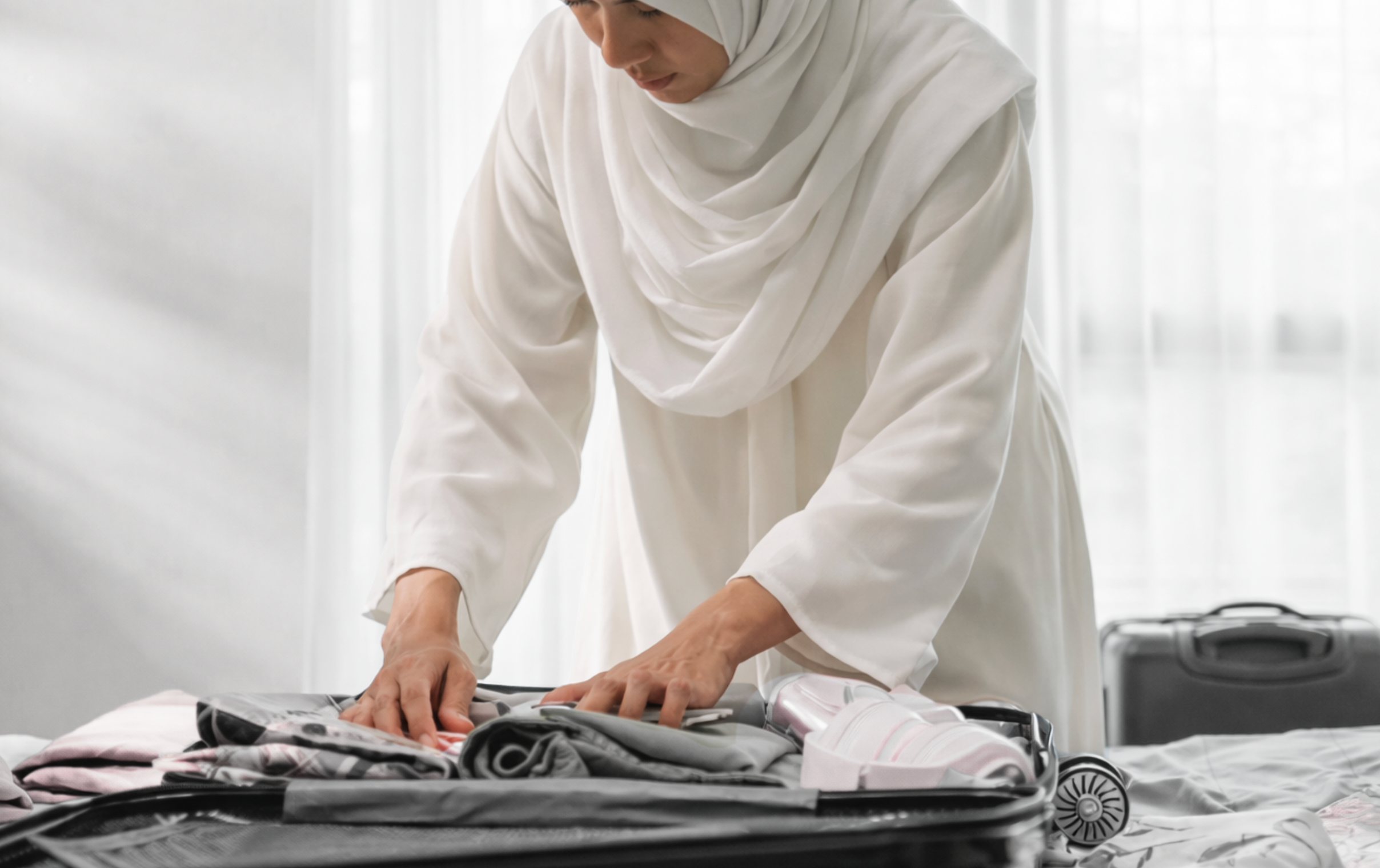
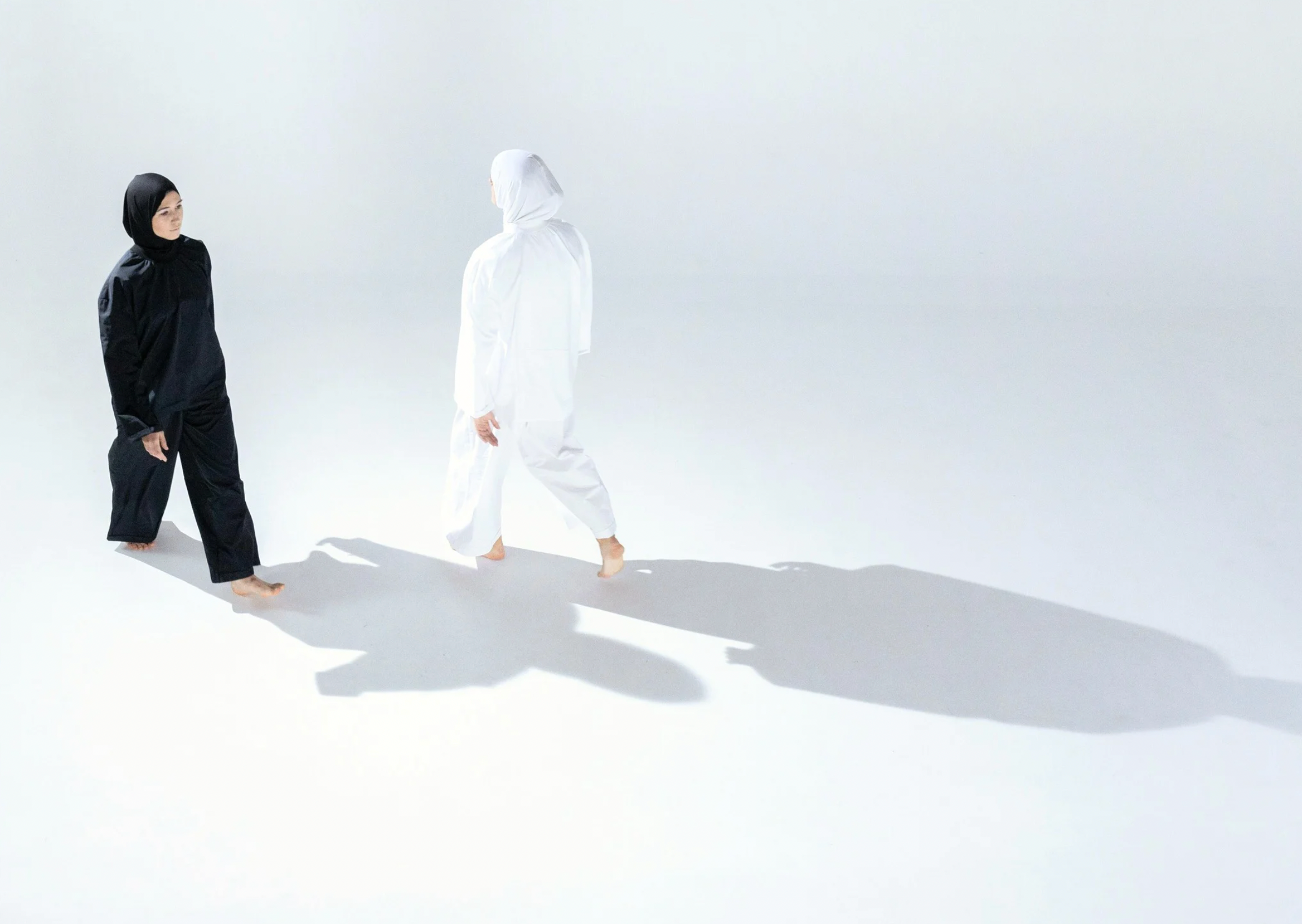
When preparing for Hajj and Umrah, clothing should balance modesty, comfort, and practicality. Unlike men, there are no specific Ihram garments required for women: stitched and everyday clothing are fully permissible. What matters is dressing in a way that reflects humility and respect for the sacred space you’re entering.
Because temperatures in Makkah shift throughout the day — and even more so in transitional months like May — light layering becomes essential. Black and white abayas remain popular choices not only for their symbolism of modesty, but also for their comfort and timeless simplicity during the rituals.
Particular attention should be given to what you wear underneath the abaya. Look for loose and breezy linen fabric top and trousers to maximize air flow and moisture evaporation. Make sure the trousers provide a fabric layer between the thighs to prevent chaffing. Avoid nylon fabrics that trap heat, retain moisture and create a hospitable environment for bacteria.
Source: The Prophet ﷺ said women in Ihram may wear anything except niqab and gloves (Sahih al-Bukhari 1838).
This preserves modesty and comfort, especially in the heat of Makkah.
4. Women May Cover Their Heads, But Not Their Faces
A well-chosen hijab can make a meaningful difference in your comfort during Umrah. Look for something loose, breathable, and lightweight, so it stays comfortable across long hours of movement and prayer.
Neutral and modest colors are ideal, with black remaining a classic, respectful choice. Be sure your hijab is arranged neatly and does not cover the face. Using an under-scarf can help keep everything in place throughout the rituals.
Sources:
-
“A woman in Ihram should not wear niqab…” (Sahih al-Bukhari 1838).
-
Women may lower a cloth loosely from above the face without touching it (Muwatta Malik).
This maintains modesty while following the Sunnah.
5. Gloves Are Not Allowed
While hands may be covered with long sleeves, sewn gloves are not permitted.
Source: “A woman in Ihram must not wear gloves.” (Sahih al-Bukhari 1838).
6. No Perfume Before or During Ihram
Women must avoid perfume on:
-
clothes
-
body
-
hair
-
personal items
Even scented soaps and lotions are avoided. That's why we developed our unscented SOI Hygiene Kit.
Sources:
-
The Prophet ﷺ forbade wearing perfume in Ihram (Sahih al-Bukhari 1542).
-
Perfume applied before Ihram cannot be worn once Ihram begins (Sahih Muslim 1189).

7. No Cutting Hair or Nails
Cutting the hair or nails after entering Ihram is not permitted until the appropriate ritual time. All personal maintenance must be done before entering into the state of Ihram.
Sources:
-
“Do not shave your heads until the sacrifice reaches its place.” (Qur’an 2:196).
-
Cutting hair during Ihram requires fidyah (Sahih al-Bukhari 4518).
8. No Marital Intimacy or Romantic Contact
Sexual relations, physical intimacy, flirting, or romantic speech are strictly prohibited during the state of Ihram.
Sources:
-
“…There is to be no sexual relations… during Hajj.” (Qur’an 2:197).
-
Intimacy in Ihram invalidates Hajj and requires severe penalty (Sahih Muslim 1211).
9. No Removing Body Hair
All forms of body hair removal—plucking, waxing, shaving, threading—are paused in Ihram. All personal hygiene and maintenance should be done before entering into the state of Ihram.
Sources:
-
The Qur’anic instruction not to cut or shave the hair applies until the sacrifice (Qur’an 2:196).
-
Removing hair intentionally requires fidyah to be paid (Sahih al-Bukhari 4518).
10. No Hunting, Killing Game, or Harming Wildlife
Ihram protects living creatures. A woman may not hunt or assist in hunting.
Exception: dangerous pests (snakes, scorpions, etc.) may be removed for safety.
Sources:
-
“Hunting is unlawful for you while you are in Ihram.” (Qur’an 5:95).
-
The Prophet ﷺ reinforced this prohibition (Sahih Muslim 1197).
11. Do Not Quarrel, Insult, or Argue
It's very important to keep in mind that mental and emotional discipline is part of Ihram. Arguing, harsh speech, and disputes undermine the sanctity of worshi and are forbidden in the state of Ihram.
Source:
“There shall be no obscenity, no wickedness, and no disputing during Hajj.” (Qur’an 2:197).
This rule preserves spiritual presence—something many pilgrims struggle with under heat and crowds.
12. No Makeup, Scented Cosmetics, or Beautification
Ihram calls for optimal modesty, simplicity and humility. Women should avoid:
-
foundation, eyeliner, lipstick
-
scented deodorants
-
cosmetic enhancements
-
subtle jewelry is generally permissible. Please note that ornamental or showy jewelry worn with the intention of appearing more attractive is not.
For all your unscented essentials to stay comfortable and clean, explore our unscented SOI Hygiene Kit. It includes unscented deodorant, fragrance-free shampoo, hand and body wash, anti-chaffing balm, unscented sun screen and non-alcohol based hand sanitizer. 
Sources:
-
Prohibition of perfume and beautification during Ihram (Sahih al-Bukhari 1542).
-
The broader instruction against face coverings and gloves is tied to avoiding adornment (Sahih al-Bukhari 1838).
Final Thoughts
These 12 rules of Ihram for women, rooted in authentic Islamic sources, encapsulate the practices and prohibitions of being in a state of Ihram. In this spiritual state, Allah (SWT) has prescribed the specific conditions we must meet to suspend worldly habits and focus entirely on worshipping Allah.
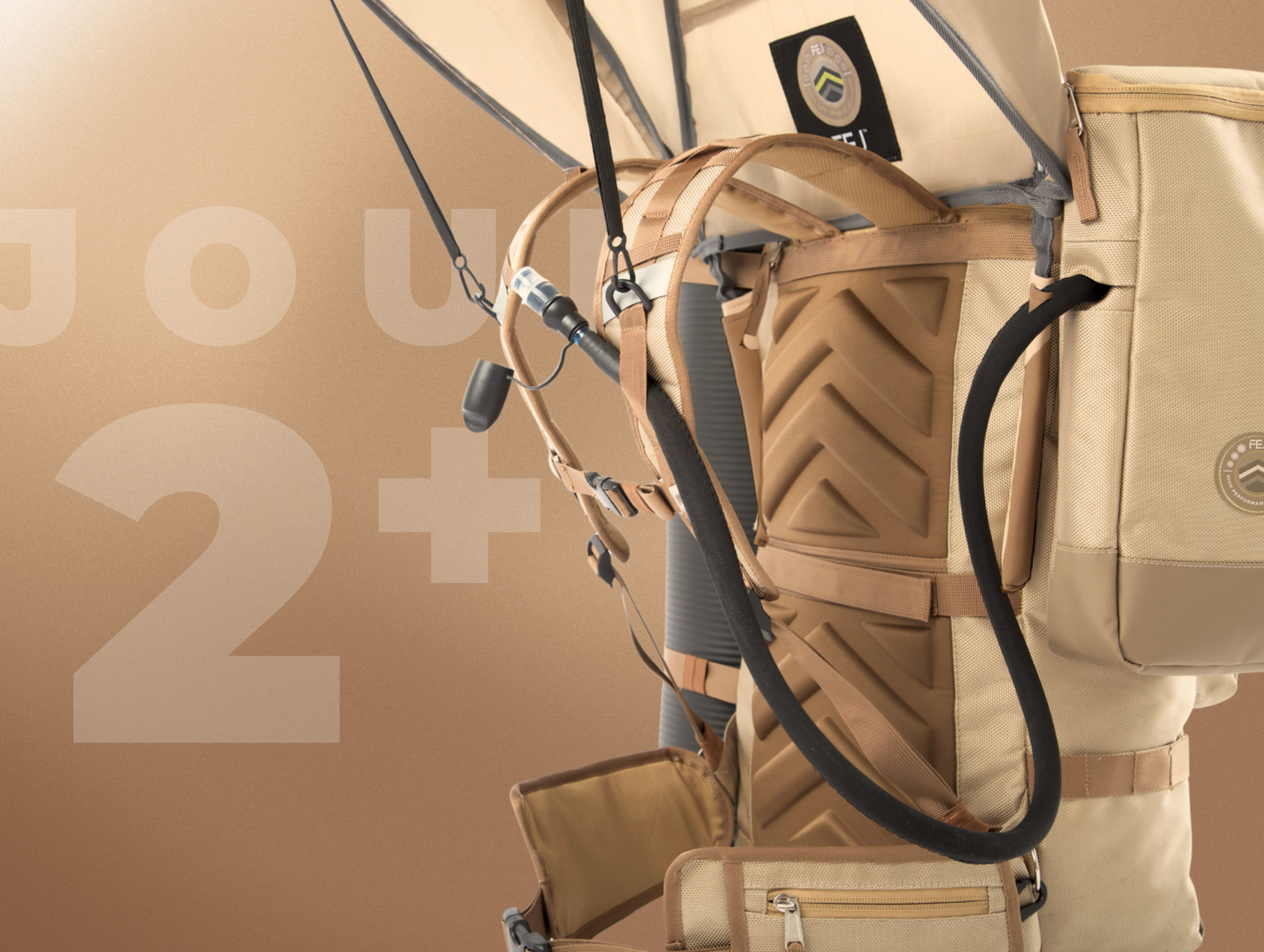
At FEJ Gear, we design specialized products—hydration systems, cooling fabrics, backpacks, and safety-driven gear—to provide optimal comfort, convenience and safety during your journey. These sacred moments are too valuable to be impacted by the low-quality, inadequate and often faulty products that flood the local market.
Giving our pilgrims the absolute best, in product design, craftsmanship, materials - this is not simply our core brand ethos, but a moral obligation.
Read more

Why Tariffs Have Affected FEJ Gear Pricing — And What It Means for You
Discover why recent U.S. import tariffs have impacted FEJ Gear’s pricing and how we’re maintaining the highest standards in Hajj and Umrah gear. Learn how tariff changes affect material costs, prod...
Read more
Our Pricing for Hajj 2026 & Limited Supply
This post outlines FEJ Gear’s Pre-Order program for the Hajj 2026 season, designed to help pilgrims secure their essential gear early — and save significantly in the process. Customers can enjoy up...
Read more

Leave a comment
This site is protected by hCaptcha and the hCaptcha Privacy Policy and Terms of Service apply.